
Created
Coined here with its parent word, or words named where they belong.
Unearthed
An old word recovered from disuse and given a new lease of life.
Alive
Still spoken somewhere in the world – you may not have met it and Richard simply loves it.

c r e a t e d
n. & v.
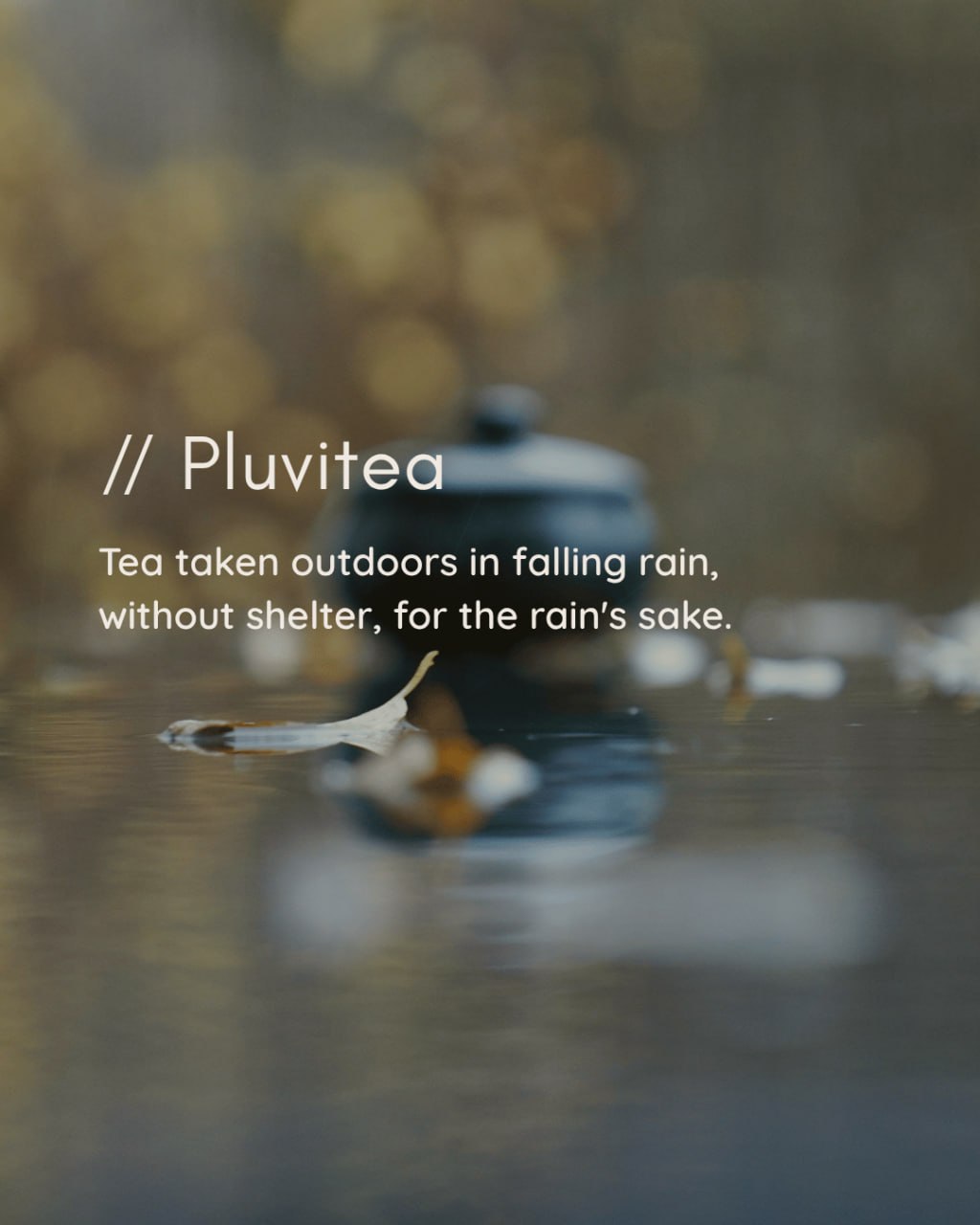
Tea taken outdoors in falling rain, without shelter, for the rain's sake.
to pluvitea
As a well known contemplative tea-drinker, I had to come up with a word for this experience, which I utterly recommend for any bold contemplative. The steam goes up as the rain comes down, and the two meet an inch above the cup. That's the whole transmission, and it's so worth getting wet for. In the rain, the tea cools far faster than it normally does, so there is a small race you have agreed to, and you end up drinking at whatever pace the sky has chosen. My very best pluviteas have been done in the gentlest of English drizzles, but if you are really courageous, you could try a storm.
Pluvitea is always a commitment. Standing under an awning disqualifies you, and being caught out in a shower with a cup in your hand is merely weather. The finest pluvitea, I have discovered, is taken beneath a tree that is not quite keeping the rain off.
When combined with a quercorious nature, pluvitea can be taken to its zenith.
"We took pluvitea under the yew, which drops its rain in slow heavy coins, every one of them audible in our cups."
"He has a pluvitea coat, which is to say a coat with many stains on it."
c r e a t e d – from uxoriousness
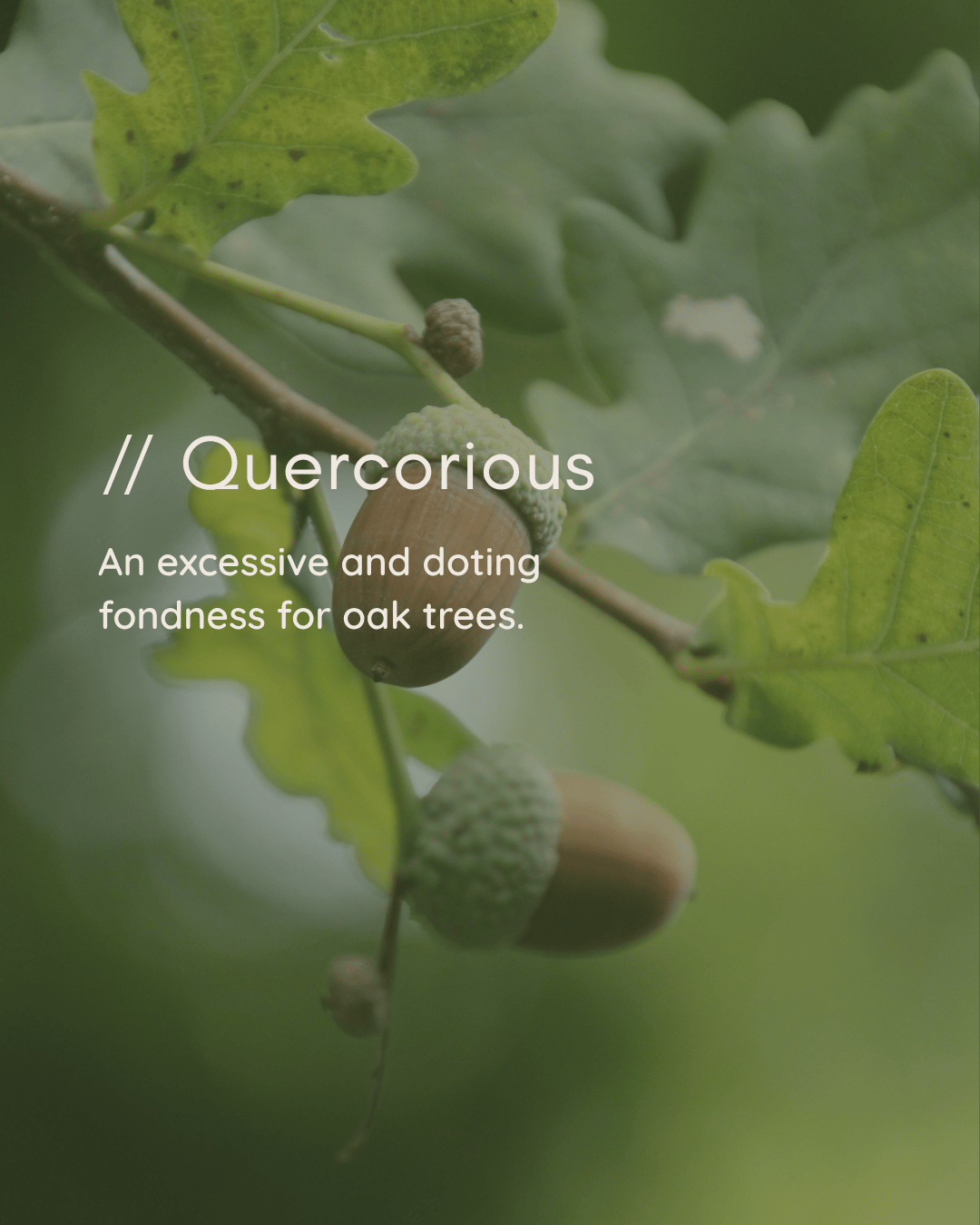
n. An excessive and doting fondness for oak trees.
quercorious, adj.
I love this one, as it describes me, and probably many of my secret friends reading these words now. This is the hand that goes out to stroke the bark of a favourite oak. A quercorious person will vehemently defend the rights of oaks, and indeed of all trees wherever they go.
The word was inspired by another favourite of mine, of which I am also guilty.
Uxoriousness is excessive devotion to one's wife. Here the wife is taken out and an oak put in her place, and the comedy transfers without losing anything, since the love in both cases is utterly real and entirely out of proportion. Quercorious people are unbearable at parties, mainly because they are right about the oaks.
"We were forty minutes late to the funeral, which I had thought was the outer limit of her quercoriousness until the drive home."
"There is a quercorious phase most men pass through in their fifties, and some never leave."

c r e a t e d – from imbas
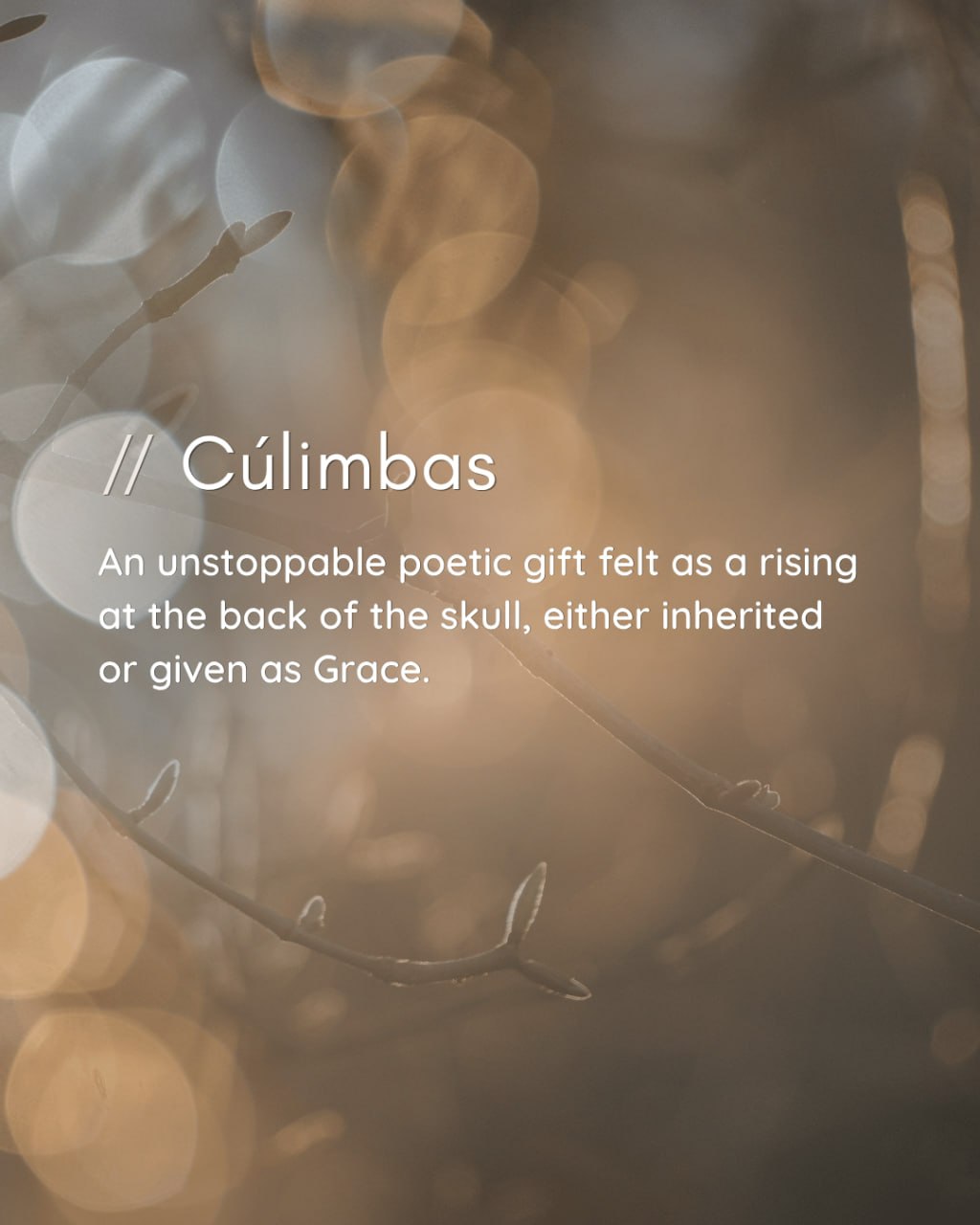
n. An unstoppable poetic gift felt as a rising at the back of the skull, either
inherited or given as Grace.
There is a place at the back of the skull that the eyes cannot reach, and the Irish located all poetry as emanating from there, which is why we should take it seriously. However, I couldn't find a word that described both the place and the gift, so I invented Cúlimbas. Imbas is the Old Irish word for the outpouring of poetic illumination – the visionary fire that ignites in our brain. And cúl is the nape, the back of the head. Cúlimbas is the marriage of the two – the imbas that rises at the occiput when this gift awakens in a soul.
The old schools knew two roads towards cúlimbas. Some were born with it already open, and it is a gift in their blood passed down a lineage, arriving often unexpectedly. Taliesin is said to have come out of the Welsh cauldron with the gift entire and no memory of learning it. The other way is through travelling into darkness, composing in the black, until the pain finally gives way to vast inner light that explodes as music The Irish poets took this road literally, lying a full day with a stone across the eyes, speaking the poem out only at nightfall.
Cúlimbas comes neither as intelligence, nor talent, but is something more ancient and unpredictable. Many a struggling poet never finds it, and others who never write a single word, unaccountably do. Rumi was a respected scholar and preacher of fifty
who had written almost nothing, until a wandering dervish walked into his life and the poems came for the rest of it. Milarepa spent years walled into the mountains as a penitent, and the songs came out of the cold and the solitude rather than out of any training. When the cúlimbas opens, the tradition speaks of great streams of poetry rising from it, each one a different current of a single fire of love. What such people all
carry is the same capacity, which is to hear what lives between the words.
"He wrote nothing for a year, then something at the back of his head suddenly opened and
the cúlimbas didn't stop for more than a decade."
"You can teach a person craft, but you cannot teach cúlimbas. You can only dive into the dark
and hope."
c r e a t e d
n. & v.
Tea taken outdoors in falling rain, without shelter, for the rain's sake.
to pluvitea
As a well known contemplative tea-drinker, I had to come up with a word for this experience, which I utterly recommend for any bold contemplative. The steam goes up as the rain comes down, and the two meet an inch above the cup. That's the whole transmission, and it's so worth getting wet for. In the rain, the tea cools far faster than it normally does, so there is a small race you have agreed to, and you end up drinking at whatever pace the sky has chosen. My very best pluviteas have been done in the gentlest of English drizzles, but if you are really courageous, you could try a storm.
Pluvitea is always a commitment. Standing under an awning disqualifies you, and being caught out in a shower with a cup in your hand is merely weather. The finest pluvitea, I have discovered, is taken beneath a tree that is not quite keeping the rain off.
When combined with a quercorious nature, pluvitea can be taken to its zenith.
"We took pluvitea under the yew, which drops its rain in slow heavy coins, every one of them audible in our cups."
"He has a pluvitea coat, which is to say a coat with many stains on it."
c r e a t e d – from uxoriousness
n. An excessive and doting fondness for oak trees.
quercorious, adj.
I love this one, as it describes me, and probably many of my secret friends reading these words now. This is the hand that goes out to stroke the bark of a favourite oak. A quercorious person will vehemently defend the rights of oaks, and indeed of all trees wherever they go.
The word was inspired by another favourite of mine, of which I am also guilty.
Uxoriousness is excessive devotion to one's wife. Here the wife is taken out and an oak put in her place, and the comedy transfers without losing anything, since the love in both cases is utterly real and entirely out of proportion. Quercorious people are unbearable at parties, mainly because they are right about the oaks.
"We were forty minutes late to the funeral, which I had thought was the outer limit of her quercoriousness until the drive home."
"There is a quercorious phase most men pass through in their fifties, and some never leave."
c r e a t e d – from imbas
n. An unstoppable poetic gift felt as a rising at the back of the skull, either
inherited or given as Grace.
There is a place at the back of the skull that the eyes cannot reach, and the Irish located all poetry as emanating from there, which is why we should take it seriously. However, I couldn't find a word that described both the place and the gift, so I invented Cúlimbas. Imbas is the Old Irish word for the outpouring of poetic illumination – the visionary fire that ignites in our brain. And cúl is the nape, the back of the head. Cúlimbas is the marriage of the two – the imbas that rises at the occiput when this gift awakens in a soul.
The old schools knew two roads towards cúlimbas. Some were born with it already open, and it is a gift in their blood passed down a lineage, arriving often unexpectedly. Taliesin is said to have come out of the Welsh cauldron with the gift entire and no memory of learning it. The other way is through travelling into darkness, composing in the black, until the pain finally gives way to vast inner light that explodes as music The Irish poets took this road literally, lying a full day with a stone across the eyes, speaking the poem out only at nightfall.
Cúlimbas comes neither as intelligence, nor talent, but is something more ancient and unpredictable. Many a struggling poet never finds it, and others who never write a single word, unaccountably do. Rumi was a respected scholar and preacher of fifty
who had written almost nothing, until a wandering dervish walked into his life and the poems came for the rest of it. Milarepa spent years walled into the mountains as a penitent, and the songs came out of the cold and the solitude rather than out of any training. When the cúlimbas opens, the tradition speaks of great streams of poetry rising from it, each one a different current of a single fire of love. What such people all
carry is the same capacity, which is to hear what lives between the words.
"He wrote nothing for a year, then something at the back of his head suddenly opened and
the cúlimbas didn't stop for more than a decade."
"You can teach a person craft, but you cannot teach cúlimbas. You can only dive into the dark
and hope."





Please confirm you want to block this member.
You will no longer be able to:
Please note: This action will also remove this member from your connections and send a report to the site admin. Please allow a few minutes for this process to complete.